Have you been thinking about switching to period underwear but are not sure where to start?
Well, you’ve come to the right place. With more awareness about zero waste period care, reusable menstrual underwear has started showing up everywhere. With so many options, styles, and claims flooding your feed, it’s easy to feel unsure about what actually works versus what’s just clever marketing.
This blog is a comprehensive guide for everything you need to know about period underwear. From how it works and who it’s best for, to the features you should look out for when choosing your favourite period pants, it will give you an in-depth look so you can decide if it’s the right option for your body, your flow, and your lifestyle.
What is period underwear and how does it work?
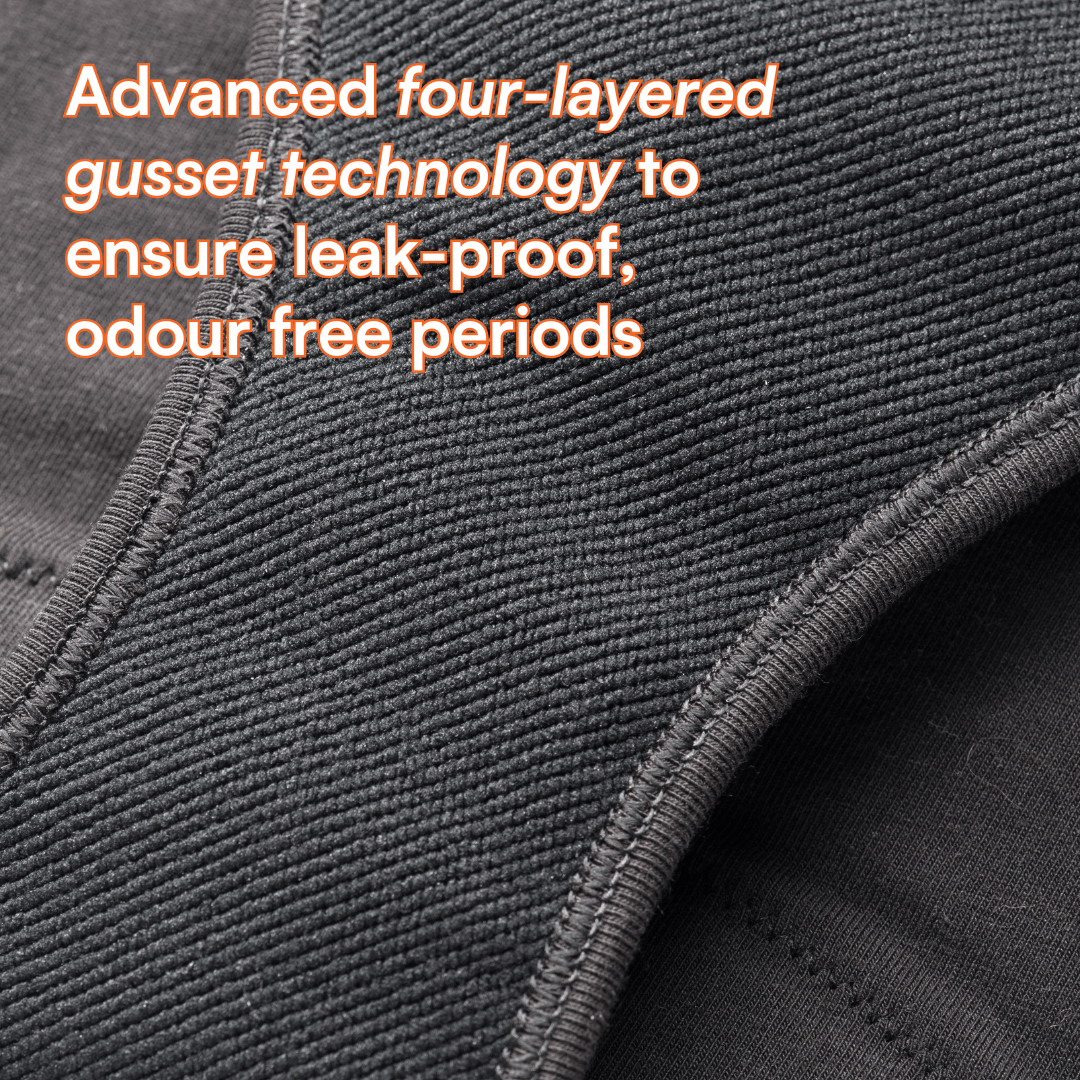
At first glance, period knickers look no different from everyday underwear, but what sets them apart is their ability to support menstrual hygiene. They are designed with clever layers that work together to absorb period flow, lock in moisture, and prevent leaks, allowing you to go about your day confidently without worrying about stains or leaks.
Typically, the top which comes in contact with your skin is made of soft, breathable fabric that wicks away moisture, and keeps you feeling dry and comfortable. Under that is the absorbent layer, often made from materials such as microfiber or cotton which captures and locks in menstrual blood.
Lastly, the bottom layer is a waterproof layer that is leak-resistant, preventing any staining or seepage onto your clothes.
The engineering behind this allows period underwear to hold the equivalent of multiple pads or tampons without feeling bulky. Because the absorbent layer distributes fluid evenly across the fabric, the pants maintain a slim, discreet profile, making them indistinguishable from regular underwear.
Some brands, such as Asan, also design gussets to accommodate clots and heavier flow patterns, providing targeted protection where it’s needed most. Period underwear absorbency levels differ from brand to brand, so it’s important to pick the right one.
Not only are these leak-proof period pants not bulky unlike traditional period products such as pads, but they’re also extremely comfortable. As an eco-friendly menstrual product, they are designed to be zero waste and are a reliable, reusable alternative within period care.
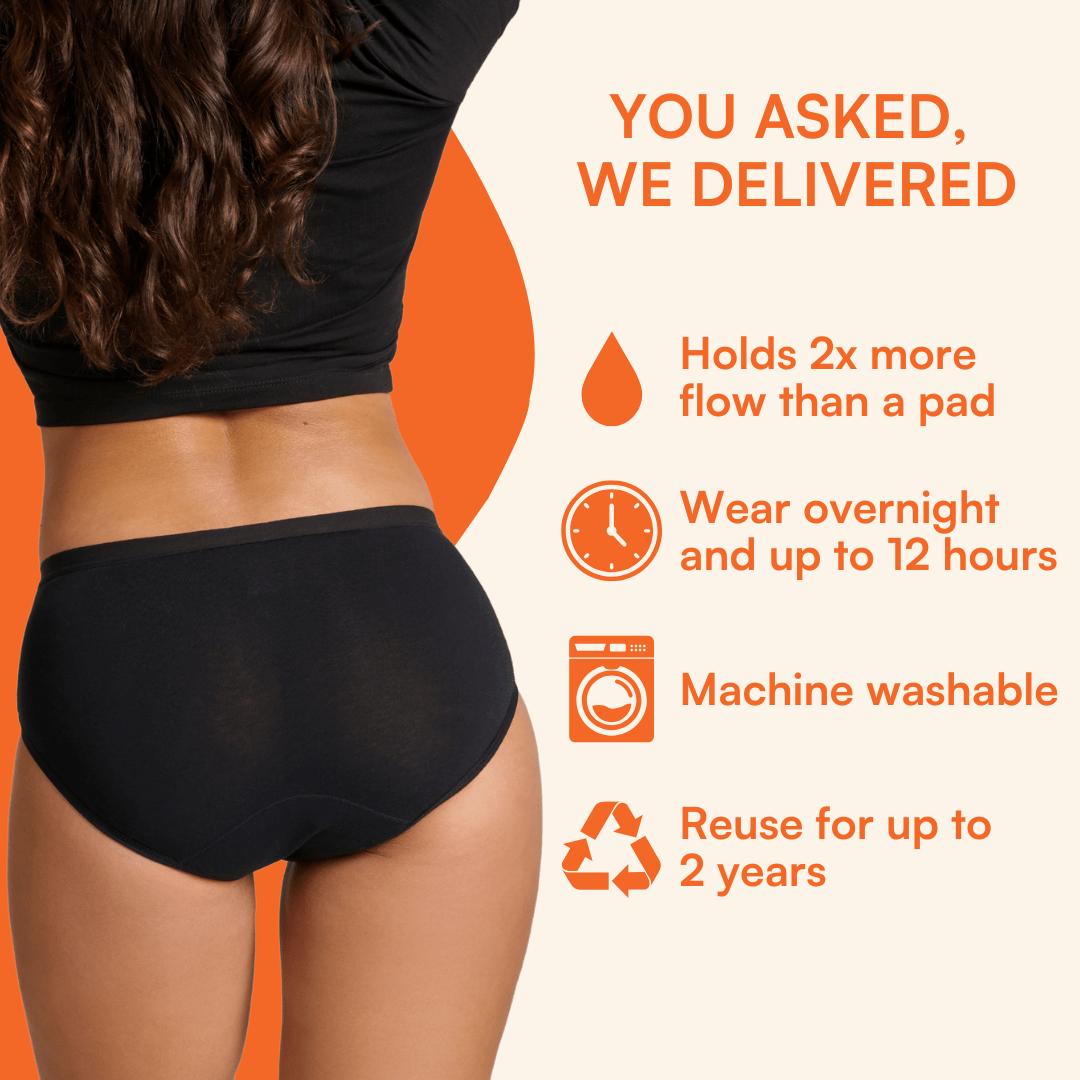
One of the biggest advantages of sustainable period underwear is that it can hold a surprisingly large amount of fluid. Depending on the brand and the style, a single pair of washable period pants can replace multiple disposable pads or tampons, sometimes holding up to four times the amount of a regular pad.
Whether you’re at work, exercising, or sleeping, these leak-proof knickers provide reliable protection, giving you peace of mind while supporting a more environmentally conscious lifestyle.
Another reason period underwear stands out is because it’s reusable. Unlike disposable period products that generate a huge amount of waste each month, period underwear can be worn, washed and worn again for months, or even years with proper care. Not only does this reduce the environmental impact of your period, but also saves you money in the long run.
To learn more about the features of period underwear, take a look at this blog on “Top 5 features for period underwear.”
How often should you wash period underwear?
If you’re thinking of making the switch to period underwear, it is important to understand how to care for them. Because they are made to absorb menstrual blood and natural body fluids, they can quickly become a breeding ground for bacteria if left unwashed.
It is best to wash your period underwear after every single wear. That might sound like a lot, but regular washing stops stains from setting in, prevents bacteria growth, and protects the absorbent layers that make odour‑controlling underwear so effective.
Without frequent washing, sweat, discharge, and blood residue can build up — compromising both menstrual hygiene and the lifespan of the product.
To follow proper washable period underwear care instructions, start with a cold‑water rinse immediately after use. Cold water prevents blood from fixing into the fibers, making stains easier to remove later. Once rinsed, you can either hand wash or machine wash your underwear.
If using a machine, select a gentle, cold‑water cycle. A mild, fragrance‑free detergent, ideally for delicate fabrics is best, and you should avoid bleach, fabric softeners, or harsh additives that can clog absorbent layers and reduce their effectiveness.
After washing, it’s best to air dry your period underwear. High heat from dryers or irons can weaken the waterproof and absorbent layers that make sustainable period underwear work in the first place. If you can, hang them to dry naturally as this helps maintain their shape, fit, and absorbency over time.
Benefits of period underwear: Is it worth the switch?
Like any menstrual product, period underwear has its pros and cons.
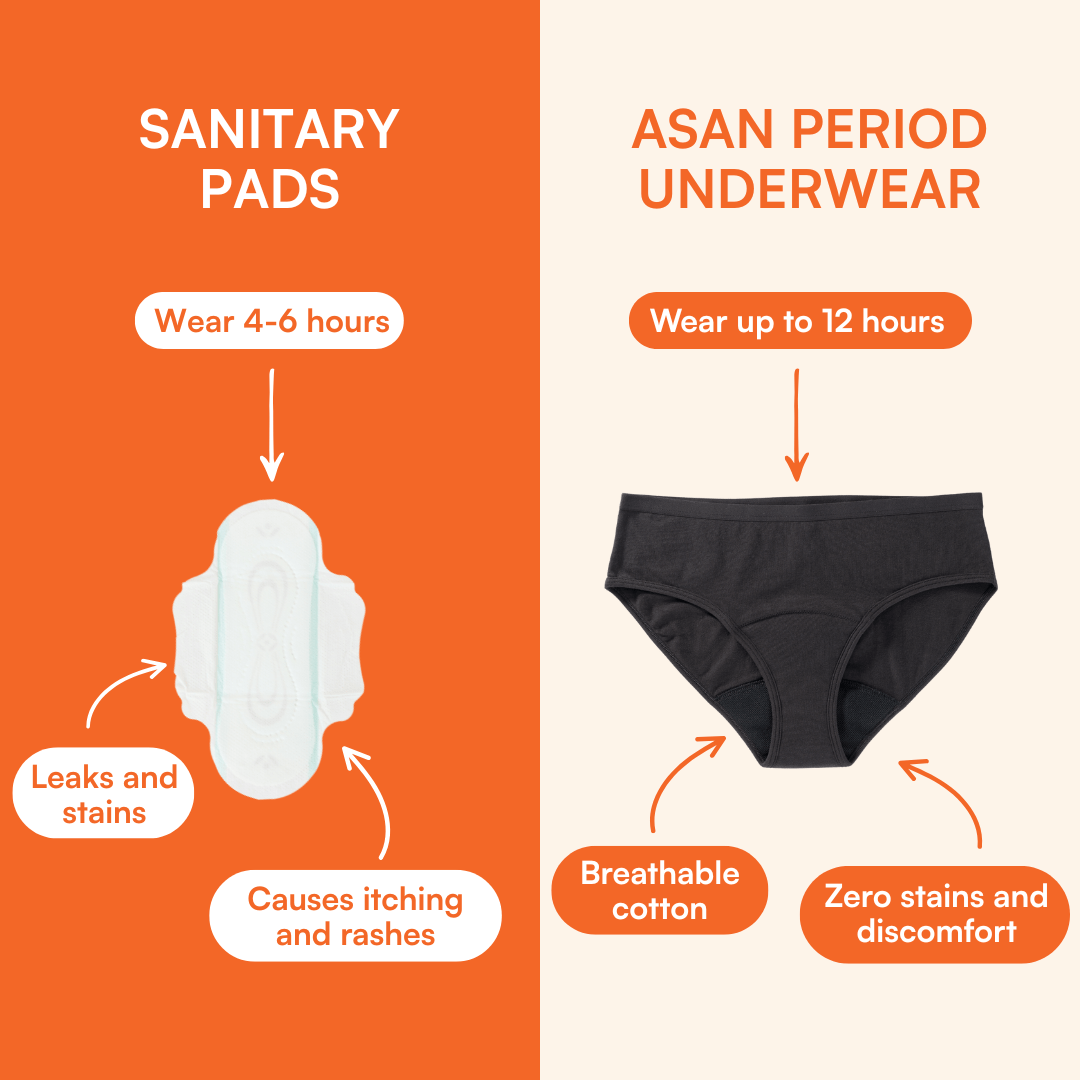
One of the biggest advantages of period underwear is how comfortable and easy it is to use. While tampons and cups require insertion, period underwear is just like everyday underwear. This makes it especially appealing for beginners and teens. Many users also find it way more comfortable and less bulky and irritating than traditional pads, particularly on lighter days or when resting at home.
From a sustainability perspective, period underwear definitely stands out as a good option. One pair can be washed and re-used for two to three years, drastically reducing waste as compared to pads or tampons. This also feeds into another advantage which is cost-saving because one or two pairs can replace hundreds of disposables, saving money in the long run.
Also, many period underwear options use breathable, natural fabrics that are gentle on the skin and are super safe for your body. For example, Asan period underwear is made from high quality breathable cotton and is OEKO-TEX certified.
And lastly, even if you’re not looking for period underwear as a stand-alone option, it is especially great to also use with other period products such as a menstrual cup for extra protection.
However, here are a few drawbacks to consider. It can get expensive, especially because you’ll probably need several pairs to cover an entire cycle. It also requires taking care of it properly, including rinsing after use, washing in cold water, and air‑drying, which may feel like a lot of work or inconvenient depending on your lifestyle.
But, while period underwear isn’t a perfect fit for everyone, it is a great option and definitely worth the switch.
Take a look at this blog to understand what features you should look for when choosing period underwear.
Are you supposed to free bleed in period underwear?
If you’re new to sustainable menstrual products like washable period underwear, you might have heard the term free bleeding and wondered what it really means. It is essentially when you allow your body to bleed into the underwear itself without needing pads, tampons, or cups.
As mentioned above, period underwear is actually designed with multiple layers that absorb your period blood, while also keeping you dry and comfortable. So yes, when you wear period underwear, you are “free bleeding,” but with protection.
Unlike just normal free bleeding, where blood flows without any absorbent product involved, wearing period underwear lets you experience the natural flow of your period while keeping yourself dry, confident, and clean. That’s one of the reasons many people who adopt reusable period underwear find it both empowering and practical.
Part of what makes this type of period care appealing is how comfortable period underwear feels. There’s no shifting pad, no crinkly edges, and no irritation. Just soft, breathable fabric that feels like your favorite everyday underwear.
In short, period underwear is designed to let you manage your period naturally and comfortably, but with built-in protection. Once you understand how it works and choose the right absorbency level, especially heavy flow underwear for your heavier days, you may find this form of period care both freeing and practical!
What happens to clots when you wear period underwear?
It is very normal for menstrual blood clots to show up during your cycle, especially on your heavier flow days. They form when your body releases proteins to help blood coagulate as the uterine lining sheds, and most are harmless.
When you first switch to period underwear, the idea of something more solid sitting on the fabric might feel unfamiliar. But here’s what actually happens, period panties use multiple layers of moisture‑wicking and absorbent cloth designed to pull liquid menstrual blood away from your skin and into the core of the garment.
This means the fluid part of your flow, including the liquid around clots gets absorbed just as it would with a pad. What stays behind, though, is the semi‑solid portion of the clot, which the fabric itself can’t dissolve or break down.
So if you look down after using your period underwear and see a little tissue‑like residue from a clot, that’s completely normal. A quick wipe with toilet paper or gentle rinse when you go to the bathroom is usually enough to clear it.
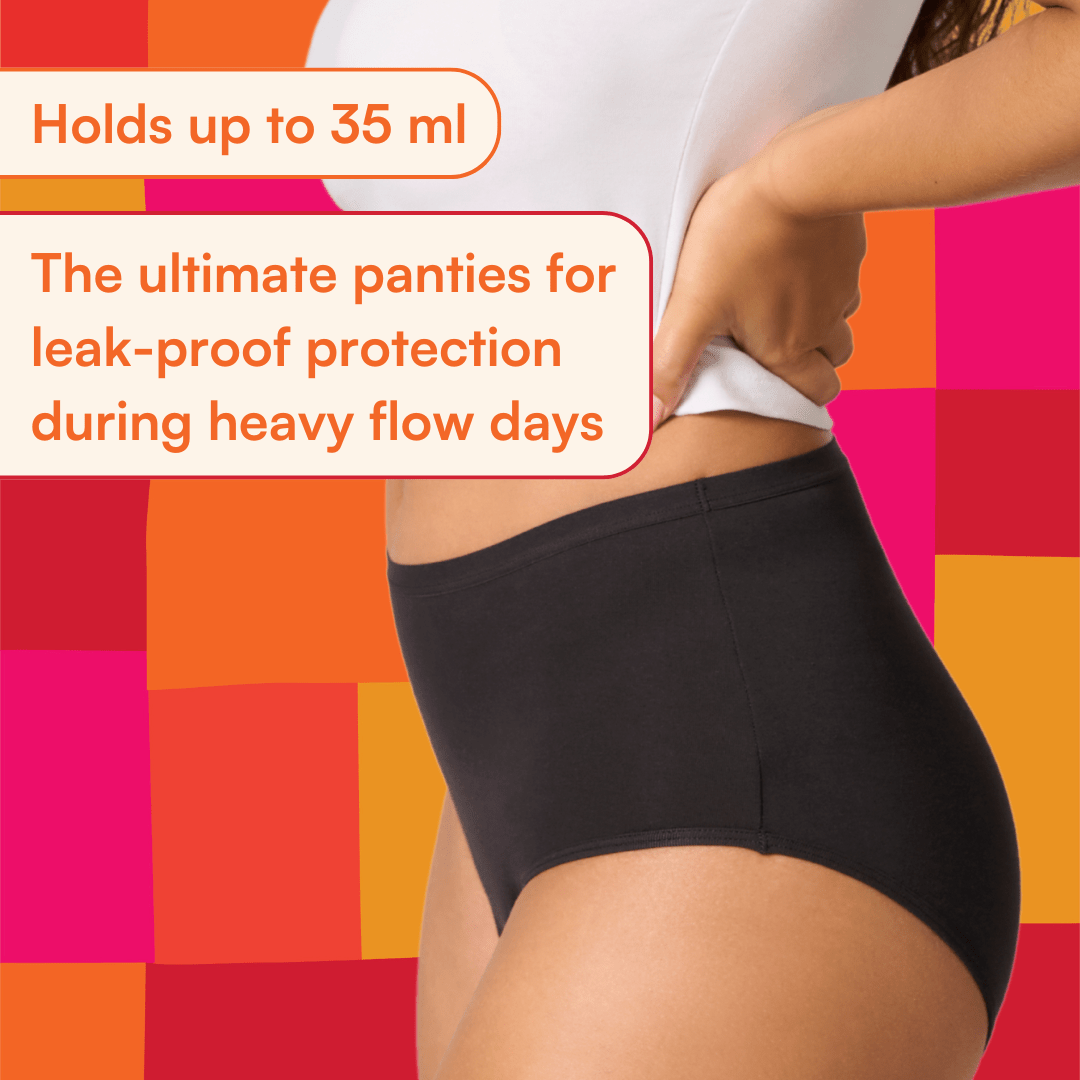
If you have a consistently heavy flow and see clots more often, then investing in heavy flow underwear with higher absorbency is the way to go. These designs have more moisture‑wicking layers built into the gusset, so they can manage the heavy flow better and keep you dry and comfortable.
Don’t worry, the presence of clots doesn’t compromise how the period underwear actually works, it just means your body is doing what it’s supposed to during your period.
To understand this in more detail, take a look at the blog, ‘What happens to clots with period underwear?’
Can period underwear be used for postpartum bleeding?
The time after birth brings a wave of physical recovery and emotional changes, and when your body is healing, comfort becomes a top priority. We’re often asked by new mothers whether period underwear can be used for postpartum bleeding (lochia).
The answer is yes, period underwear can absolutely be used for postpartum bleeding, but it’s most useful during the later stages of recovery. This is because in the beginning bleeding and discharge is heavy, sometimes beyond the absorbent capacity of the period underwear.
But during the later stages, bleeding becomes intermittent or lighter, enough for the period underwear to absorb it and remain dry. It is especially great for overnight protection!
Read more about this in Asan’s blog, ‘Can period underwear be used for postpartum?’
When choosing the right brand of underwear for your specific needs, look through period underwear reviews for features that support healing and comfort such as a high waist, soft but secure waistband, full coverage and light, medium or high absorbency.
Is period underwear better than a menstrual cup?
When it comes to menstrual products comparison, especially between reusable ones such as menstrual cups and period underwear, there’s no right answer that can apply to everyone. Both are reusable, modern alternatives to disposable pads and tampons, but they function in very different ways and work for different bodies, comfort levels, and lifestyles. Understanding how each option works can help you choose the period care product that truly fits your needs.
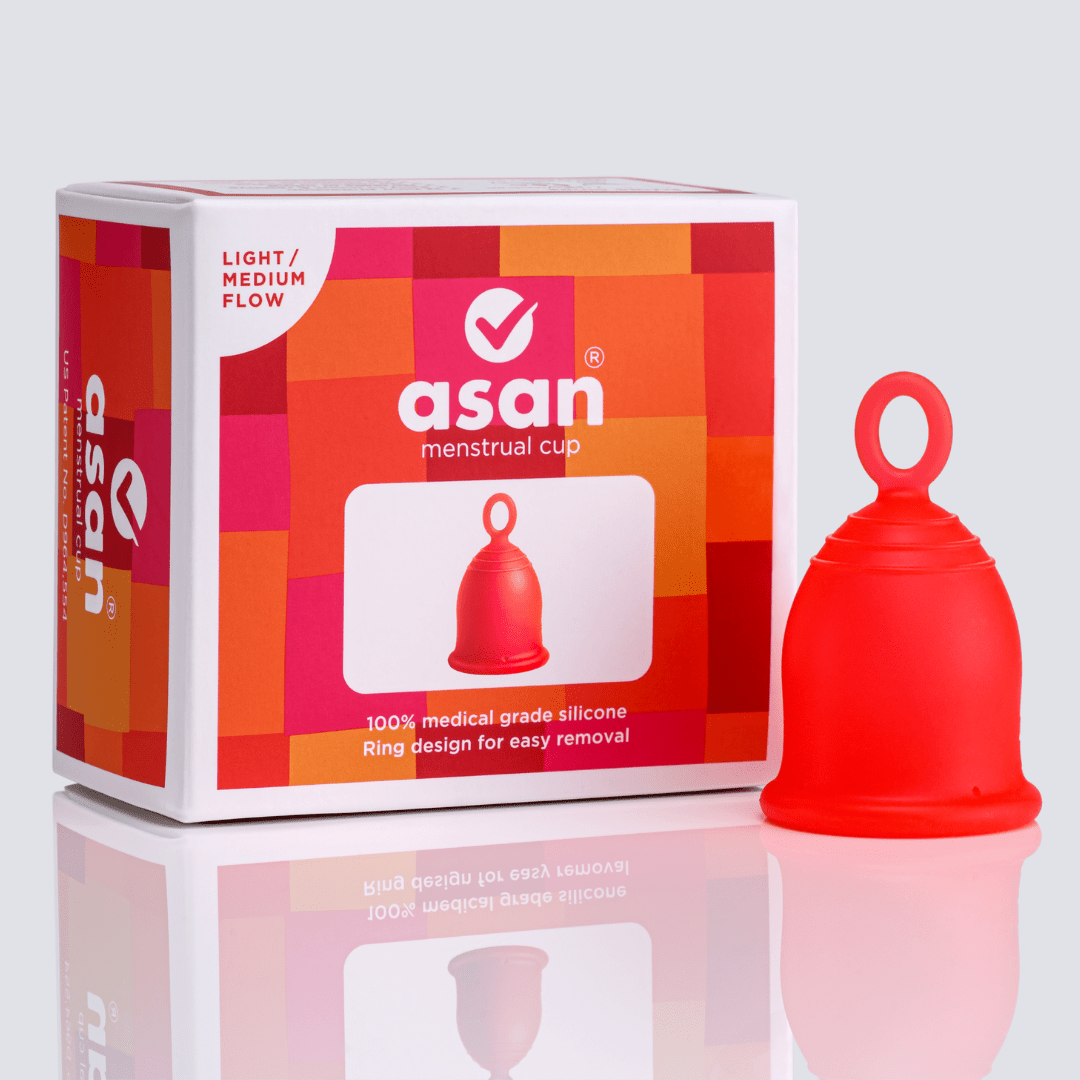
A menstrual cup is a small, bell-shaped device made from medical-grade silicone that you insert into your vagina to collect menstrual blood. Once inserted correctly, you can leave it in for up to 12 hours at a time and you don’t even feel it! One cup lasts many years, for example one Asan cup will last you 10 years and will let you move, sleep, swim and exercise without worrying about leaks.
On the other hand, period underwear absorbs the blood rather than collecting it. It’s made from absorbent, layered fabric that soaks up menstrual flow directly. You wear it just like regular underwear, with no insertion required, and this is especially great for anyone who finds insertable products intimidating or uncomfortable.
However, unlike with a menstrual cup, you cannot swim with regular period underwear. But, that doesn’t mean there isn’t an alternative. There are now period proof swimwear options that you can go for if you don’t want to use a menstrual cup but would still love to lounge in the pool or take a dip in the water during your period.
Take a look at the blog titled, ‘Menstrual cup vs. period underwear: Which is better?’ for a more detailed comparison of the two.
Ultimately, neither product is universally “better.” A menstrual cup tends to be more affordable and sustainable long-term, while period underwear is better for ease of use and non-invasive comfort. Your choice should depend on what feels right for your body, cycle, and comfort level.
Who can use period underwear?
Period underwear can be used by people of many ages, body types, and at different stages of their life. One of the biggest groups it works well for is first-time menstruators, which is why period underwear for teens has become so popular.
Because it’s worn just like regular underwear, there’s no learning curve, no insertion, and no fear of doing something “wrong.” It works as a confidence-building option for those who are still getting used to their periods.
How do you get started with switching to period underwear?
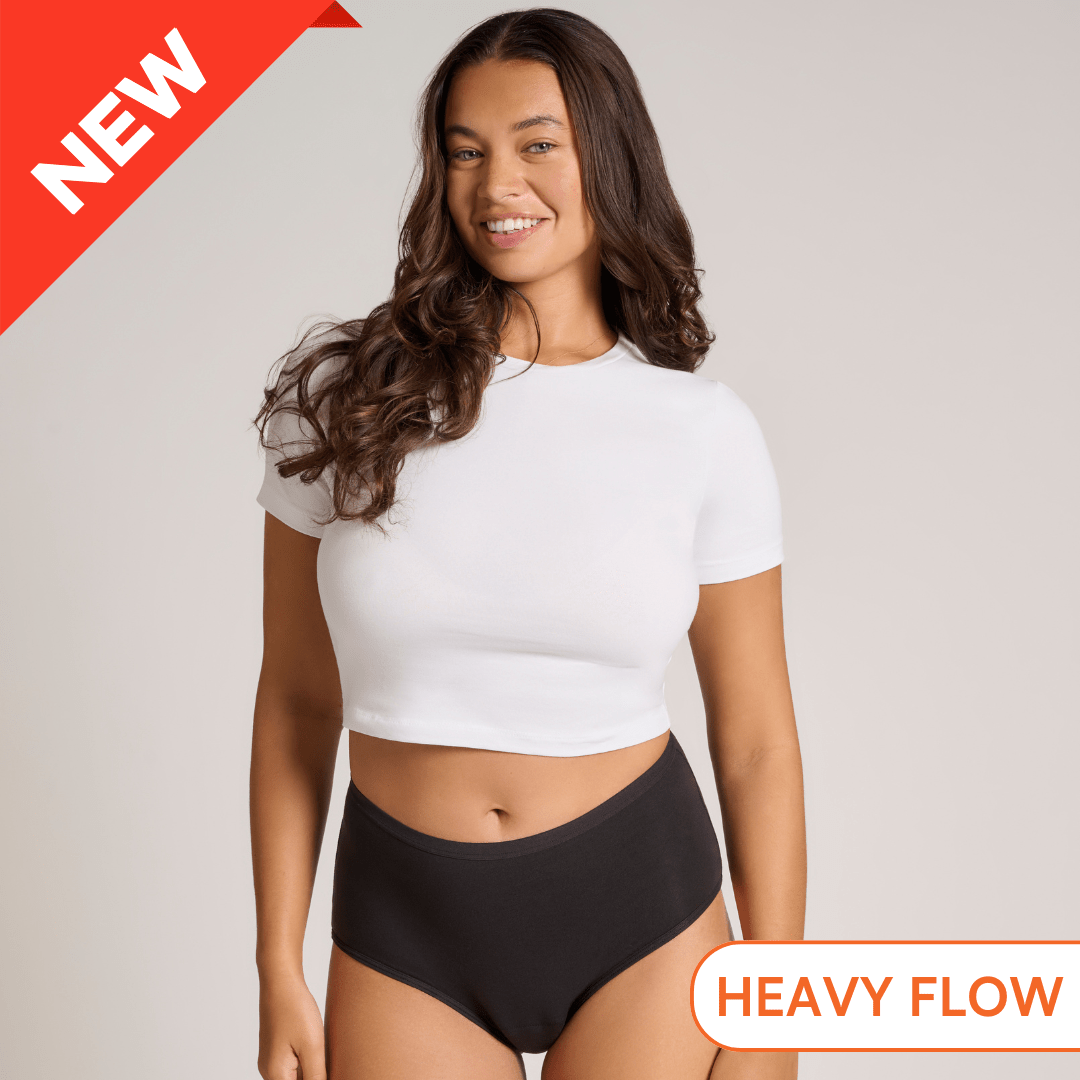
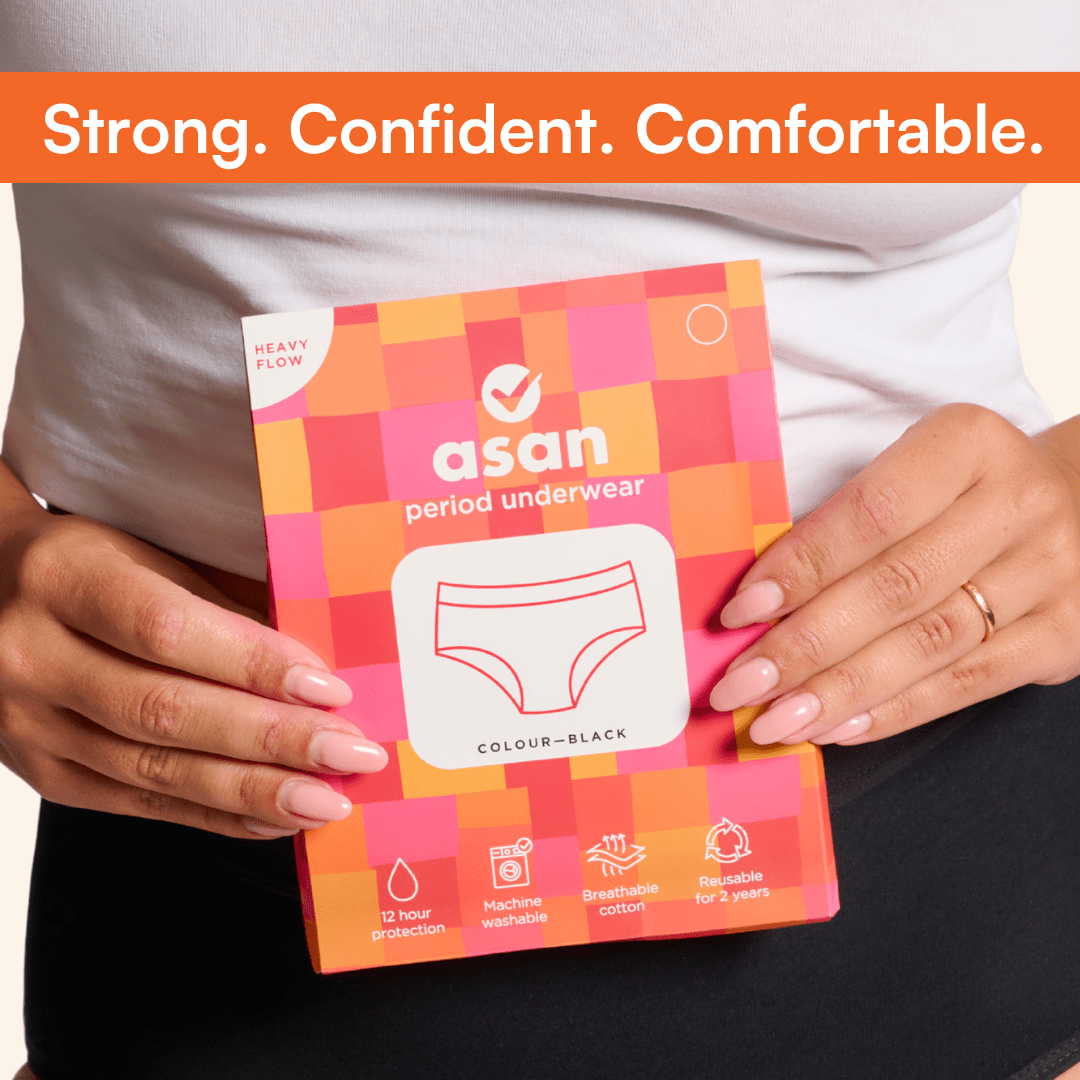
This is actually very easy! Let’s take it step by step and start by understanding your flow (light, medium or heavy). This will help you choose the right absorbency and make sure that your periods remain leak-free and comfortable. For example, the Asan period underwear comes in two options, light/medium flow and heavy flow.
The Asan Light/medium flow period underwear can hold up to 20ml, while the heavy flow can hold up to 35ml which is way more than an average pad. We advise choosing your size based on what you would require for the heaviest day of your period.
Next, choose a style that would work best for your body and lifestyle. High-waist designs are usually more comfortable for beginners, while lighter styles work well for spotting or the start and end of your period. Make sure to check sizing guides carefully!
While many people use period underwear on their own, you can also pair it with a menstrual cup for extra peace of mind. If you’re doing this, the light/medium flow underwear might be the best for you!
And remember, switching to period underwear can truly change the way you feel about your period. If you’re still wondering if this is right for you, read the blog ‘Pros and cons of period underwear: Is it worth the switch?’ to help you make the right decision.
Period Underwear: Heavy Flow

More Posts
View all-
What is a phantom period?
A phantom period means all the usual symptoms: cramps, bloating, mood swings, but no actual bleeding. Here's what causes it and what your body might be telling you.
What is a phantom period?
A phantom period means all the usual symptoms: cramps, bloating, mood swings, but no actual bleeding. Here's what causes it and what your body might be telling you.
-
What can cause black blood during menstruation?
Seeing black or dark period blood can be surprising, but it's often completely normal. From oxidation to hormonal shifts, there are many reasons your menstrual blood changes colour and most...
What can cause black blood during menstruation?
Seeing black or dark period blood can be surprising, but it's often completely normal. From oxidation to hormonal shifts, there are many reasons your menstrual blood changes colour and most...
-
The cost of menstrual cups vs. pads
Disposable pads can cost a woman six figures over a lifetime. A menstrual cup? A single one-time purchase. Here's the full cost breakdown to help you decide.
The cost of menstrual cups vs. pads
Disposable pads can cost a woman six figures over a lifetime. A menstrual cup? A single one-time purchase. Here's the full cost breakdown to help you decide.
-
Can menstrual blood be used as a biomarker?
What if your period could tell you more about your health? Menstrual blood, often treated as waste, may actually hold important biological signals.
Can menstrual blood be used as a biomarker?
What if your period could tell you more about your health? Menstrual blood, often treated as waste, may actually hold important biological signals.