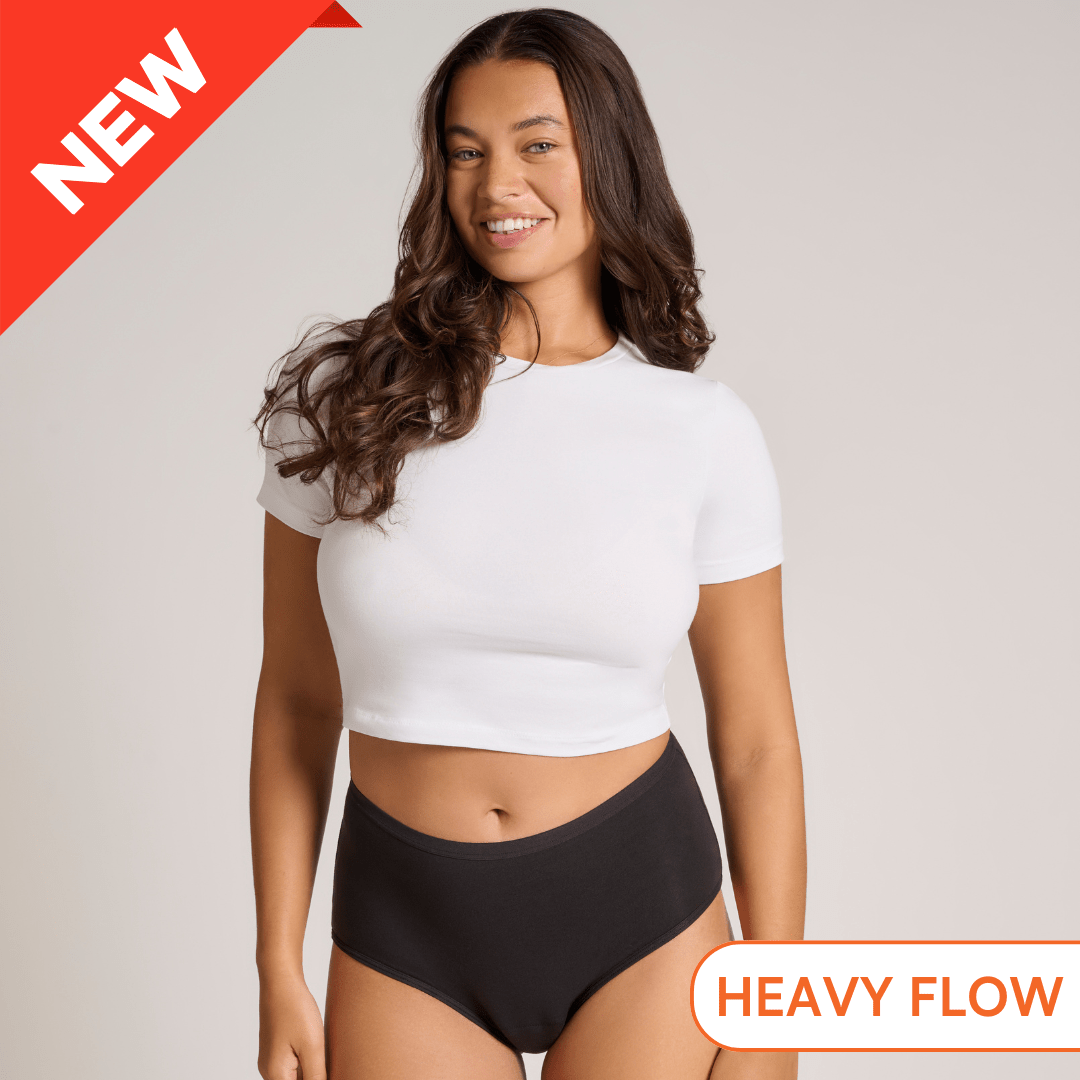
Period underwear sounds great in theory, but does it actually work? If you’ve wondered the same thing, you’re definitely not alone. As reusable period products become more mainstream, period underwear has become a really popular option.
But with that come the questions - does it hold up on heavy days, can you trust it without a backup, and can period underwear replace pads / tampons entirely? In this blog, we’re breaking it all down so you know exactly what to expect before making the switch.
How does period underwear really work?
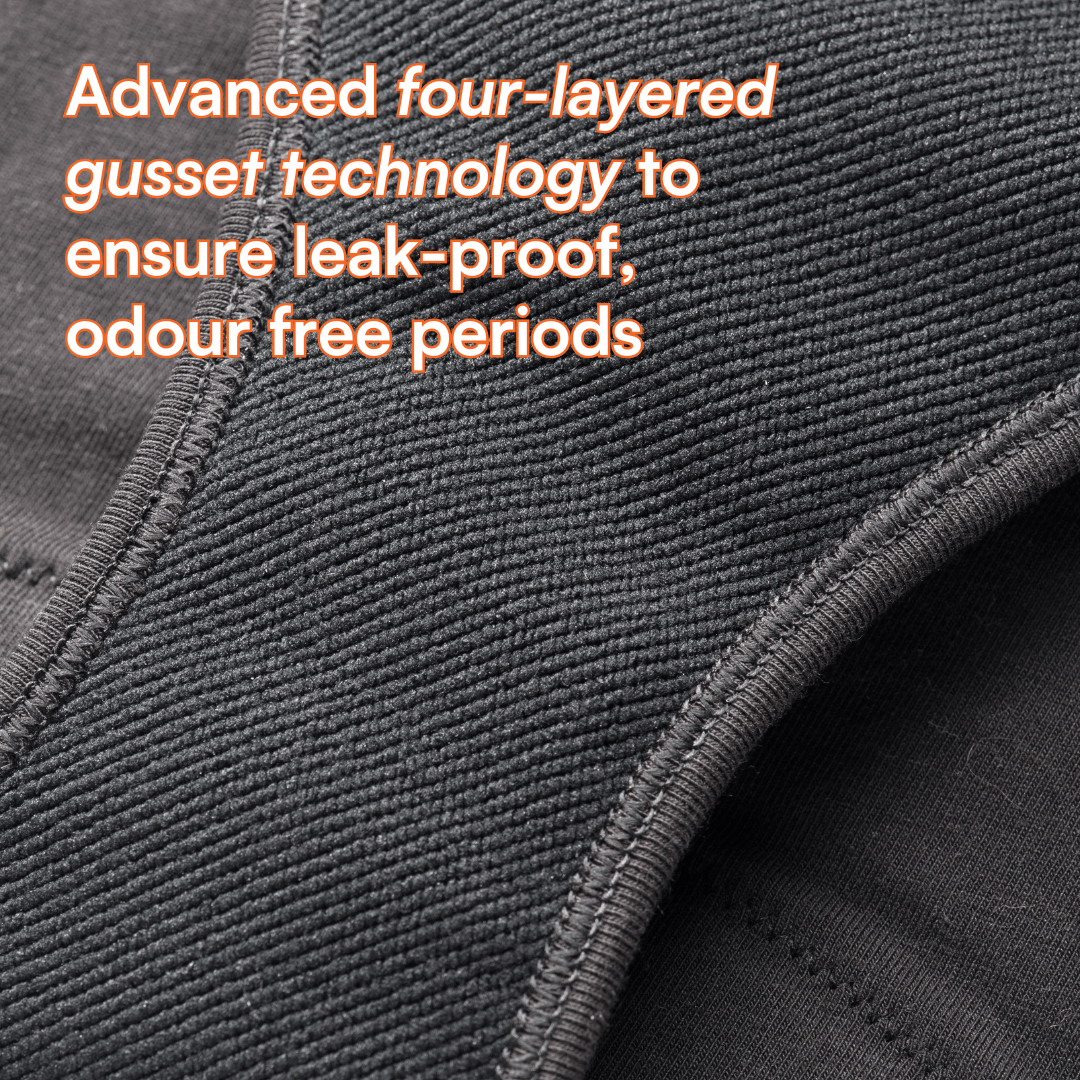
These panties are made with built-in absorbent layers, often using materials like microfiber that soak up and hold your flow. The waterproof gusset (the little section in the middle) design traps blood, keeps moisture away from your skin, and helps prevent leaks throughout the day.
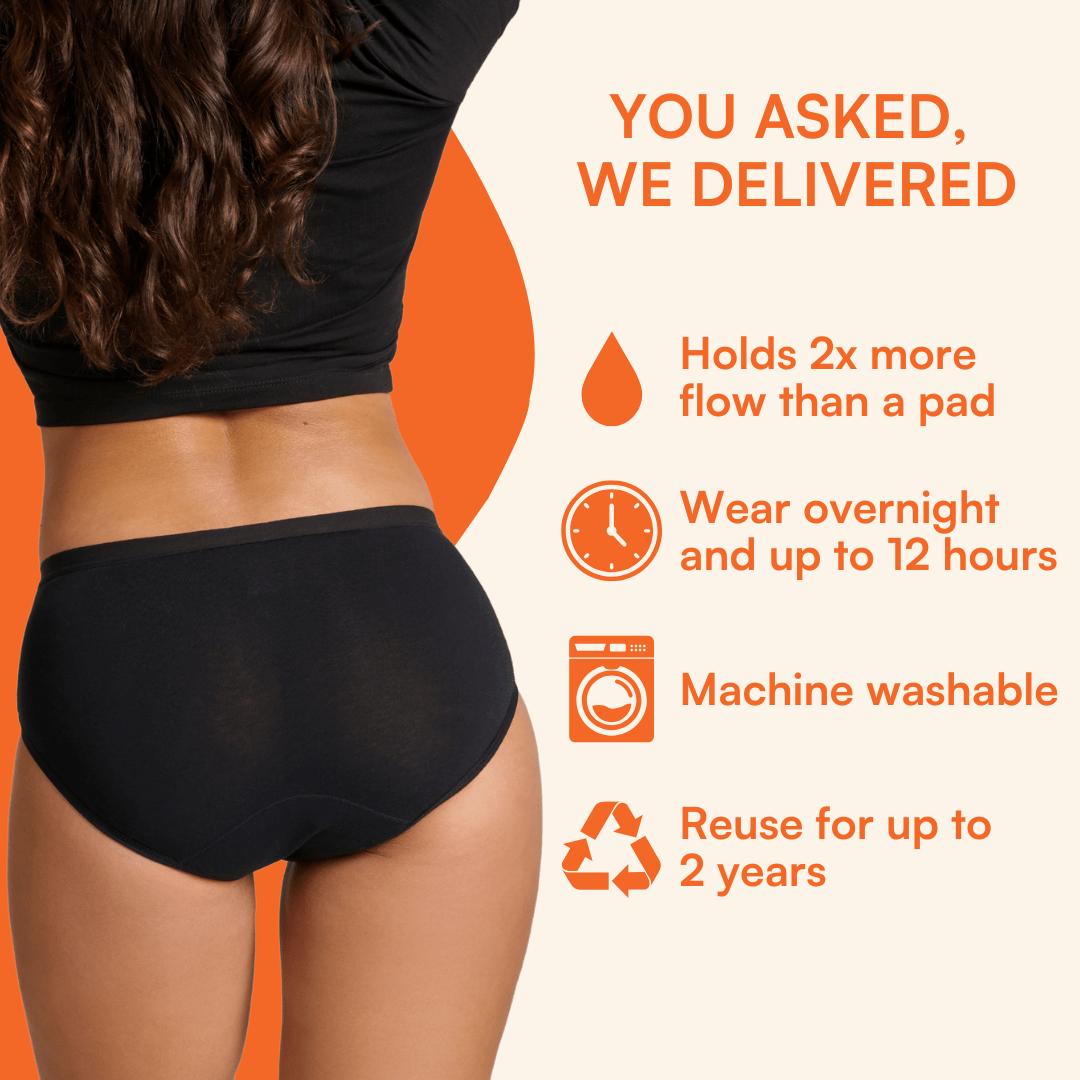
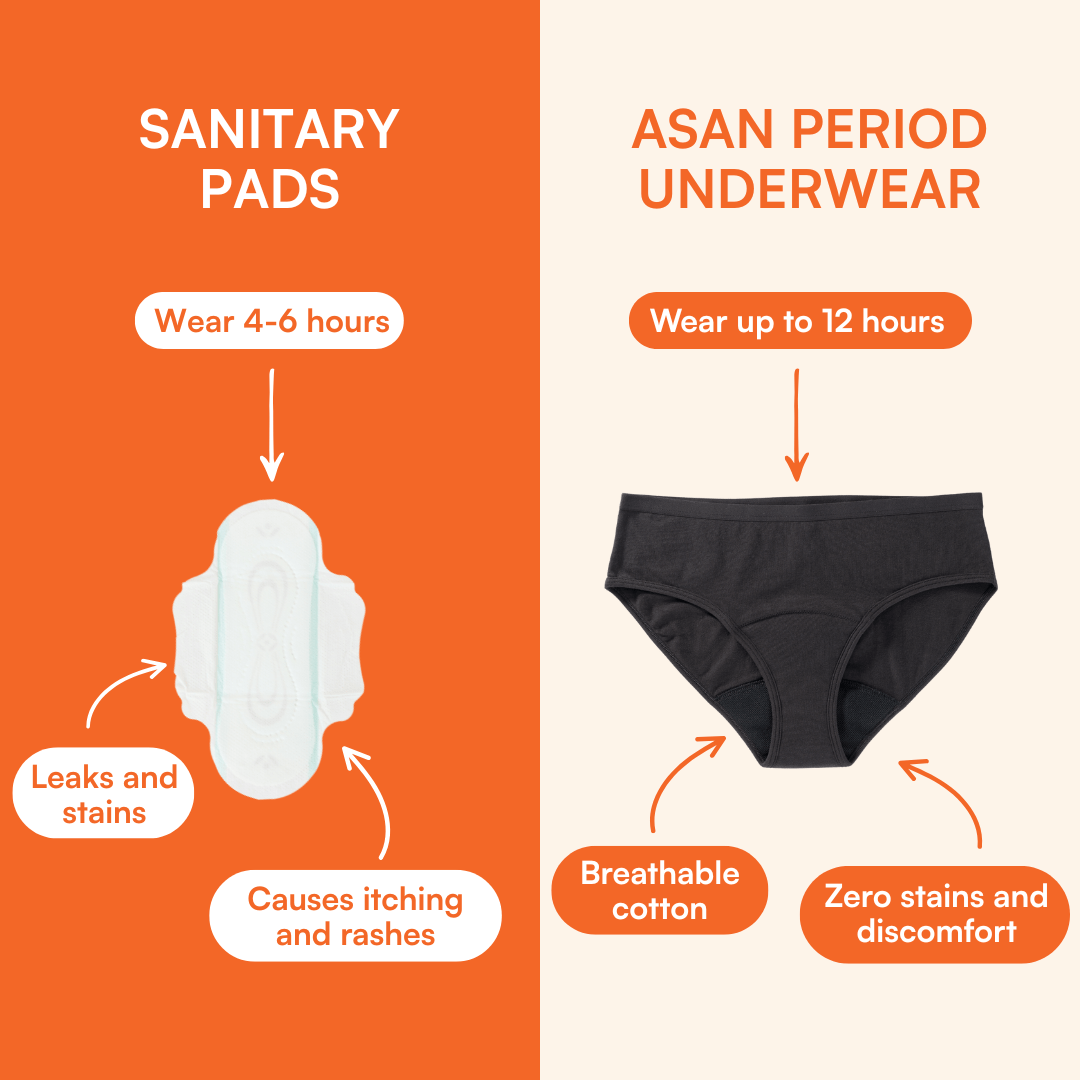
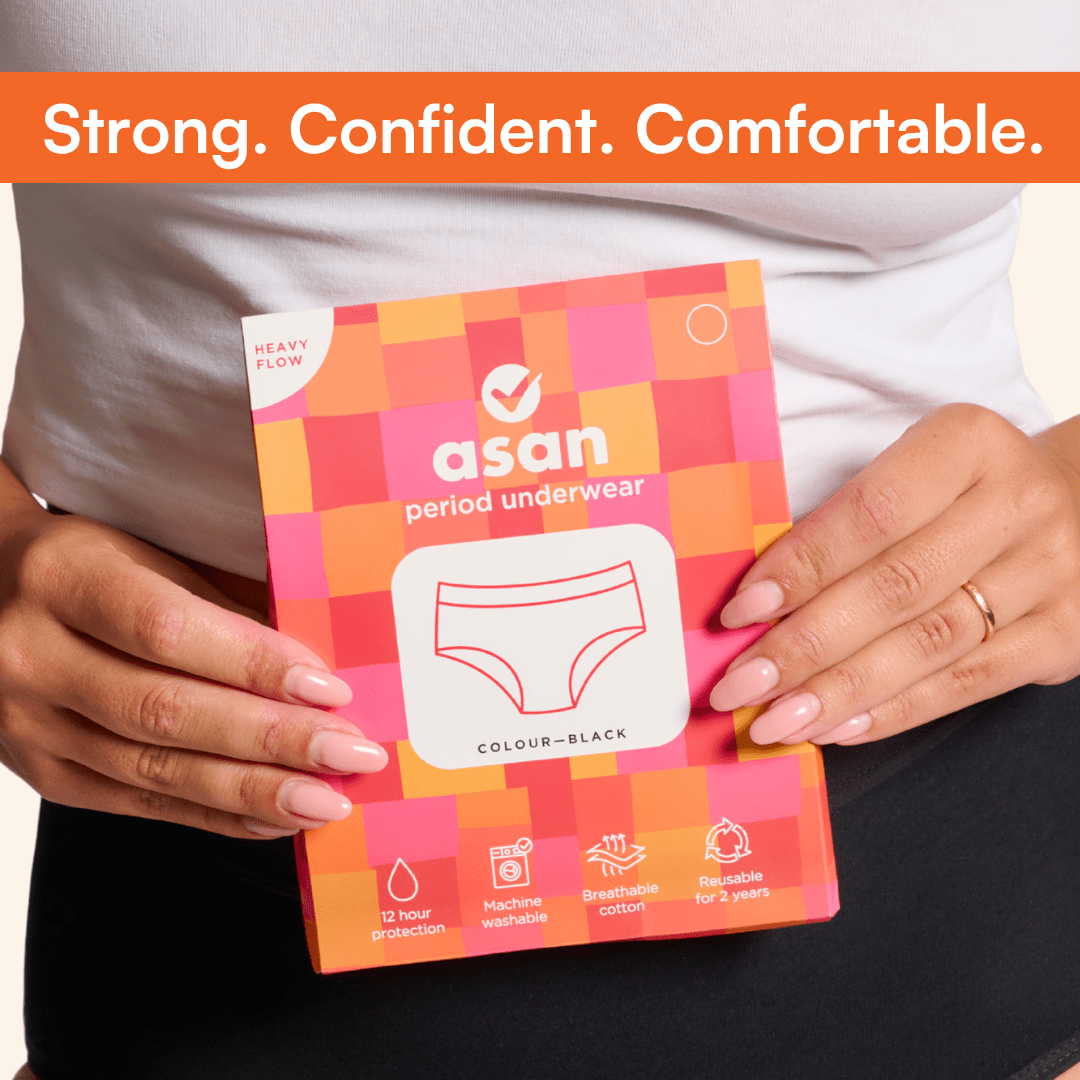
Depending on the absorbency levels period panties offer, you can choose a pair that suits your flow. You can wear them for up to 12 hours, then just rinse, wash, and reuse. Many brands also use breathable fabric period underwear to keep you comfortable. For example, Asan’s period underwear is made of soft, natural fabrics like 95% cotton and is PFAS free.
How to use period underwear?
Period underwear works just like any regular underwear. You can just slip one on when your period starts and wear them throughout the day. You can use them on their own or wear them as backup on your heavy flow days if you’re using tampons or even a menstrual cup. Most have a quick dry technology for extra comfort.
Typically on lighter days, you can keep them on for longer, but on heavy days, you might need to switch them out sooner. It’s not recommended to wear the same pair for more than 12 hours and this way you can avoid leaks or odour.
How to wash period underwear (care instructions)?
One of the best things about using period underwear is that it can last you a long time if you just take care of it well!
After using your period underwear, give it a quick rinse in cold water, wash it, and make sure it dries completely. If you’re traveling or it’s a rainy week, drying can take a bit longer, which can be a little annoying if you don’t have multiple pairs.
The good news? You can usually pop it in the washing machine on a gentle cycle, and in the dryer on low heat. Just remember to not skip letting it dry fully before wearing it again!
How to choose the right period underwear for you?
Period underwear is an incredible reusable option but, you might wonder, “what features should I look for in period underwear?” The easiest way to get started with period underwear is to try a pair on your lightest flow day. This gives you a feel for the fit and comfort without worrying about leaks.
While you’re at it, check out different brands and see what works for you. It’s better to look for ones made from sustainable, breathable materials (such as cotton) that are PFA-free, so they’re safe and non-toxic.
Also think about the absorbency you’ll need for your flow (light, medium or heavy), and choose styles that are seamless and comfy, so they feel just like regular underwear.
Period underwear is a practical, eco-friendly option that can make your period easier and more comfortable. So whether you’re curious to try them for all day use, as an overnight option, or even as a backup to tampons or menstrual cup, period underwear can easily become a staple in your cycle routine.
Frequently Asked Questions
How many millilitres can heavy period pants hold?
Most heavy flow period underwear is designed to hold around 15-20 millilitres of menstrual flow, which is roughly equivalent to 2-3 regular tampons.
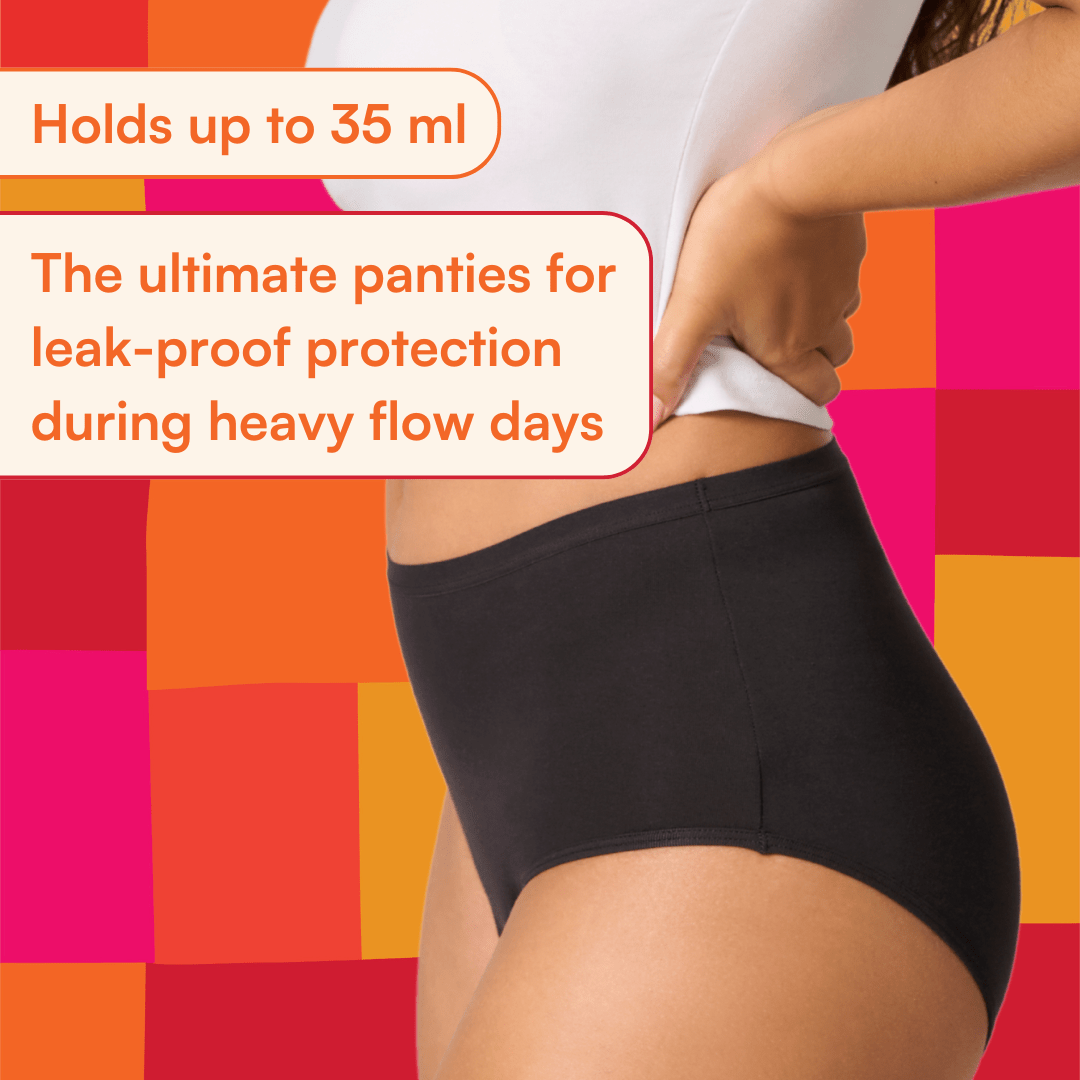
However, the Asan’s heavy flow period underwear can hold up to 35ml, which is 4x more than an average pad.
How long can you wear period underwear overnight?
You can typically wear period underwear up to 8–12 hours overnight, depending on your flow and the absorbency. It’s better to choose a high-absorbency or overnight-specific pair to avoid leaks.
Do period pants smell?
Period underwear doesn’t usually smell if you change it within 12 hours, and wash and dry properly. Most pairs are made with moisture-wicking and antimicrobial layers that help keep the odour away.
What materials are best for sensitive skin period panties?
If you have sensitive skin, the materials that period panties are made from can make a big difference. Usually, the materials that tend to be the best in this case are organic cotton, or blends with soft natural fibres.
It is best to avoid synthetic, non breathable fabrics like pure polyester and anything with harsh dyes and chemical coatings.
If you have sensitive skin, use for brands that use non‑toxic dyes/finishes or are PFAS‑free / OEKO‑TEX certified.
But if you try something out and see it reacting badly to your skin, please consult a healthcare professional to be safe!
Period Underwear: Heavy Flow

More Posts
View all-
What is a phantom period?
A phantom period means all the usual symptoms: cramps, bloating, mood swings, but no actual bleeding. Here's what causes it and what your body might be telling you.
What is a phantom period?
A phantom period means all the usual symptoms: cramps, bloating, mood swings, but no actual bleeding. Here's what causes it and what your body might be telling you.
-
What can cause black blood during menstruation?
Seeing black or dark period blood can be surprising, but it's often completely normal. From oxidation to hormonal shifts, there are many reasons your menstrual blood changes colour and most...
What can cause black blood during menstruation?
Seeing black or dark period blood can be surprising, but it's often completely normal. From oxidation to hormonal shifts, there are many reasons your menstrual blood changes colour and most...
-
The cost of menstrual cups vs. pads
Disposable pads can cost a woman six figures over a lifetime. A menstrual cup? A single one-time purchase. Here's the full cost breakdown to help you decide.
The cost of menstrual cups vs. pads
Disposable pads can cost a woman six figures over a lifetime. A menstrual cup? A single one-time purchase. Here's the full cost breakdown to help you decide.
-
Can menstrual blood be used as a biomarker?
What if your period could tell you more about your health? Menstrual blood, often treated as waste, may actually hold important biological signals.
Can menstrual blood be used as a biomarker?
What if your period could tell you more about your health? Menstrual blood, often treated as waste, may actually hold important biological signals.